
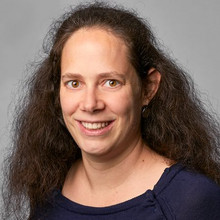
Dr. Laura Picht-Wiggering
Fon +49.4131.677-1796, laura.picht-wiggering@leuphana.de
Werdegang
Beruflicher Werdegang
seit 07/2018 wissenschaftliche Mitarbeiterin (PostDoc) Leuphana-Universität Lüneburg, College
11/2017 – 08/2018 freie Mitarbeiterin Archäologisches Museum Frankfurt
10/2017 – 11/2017 Projektmitarbeit „Felsheiligtum Ost in Priene
08/2017 – 09/2017 Projektmitarbeit Fundbearbeitung Grabung in Priene
09/2016 – 06/2017 Stipendium Research Center for Anatolian Civilizations, Koç University, Istanbul
08/2016 – 09/2016 stellvertretende Leitung der Fundbearbeitung Grabung in Priene
10/2014 – 03/2016 wissenschaftliche Mitarbeiterin Graduiertenkolleg „Wert und Äquivalent“, Goethe-Universität Frankfurt
04/2013 – 09/2014 Stipendium Graduiertenkolleg „Wert und Äquivalent“, Goethe-Universität Frankfurt
05/2012 – 06/2016 freie Mitarbeiterin Archäologisches Museum Frankfurt
08/2012 – 11/2012 wissenschaftliche Hilfskraft Institut für Archäologische Wissenschaften, Abteilung II, Goethe-Universität Frankfurt
07/2008 – 08/2014 Fundbearbeitung Grabung in Priene
Ausbildung
04/2013 – 08/2018 Dissertation Klassische Archäologie Goethe-Universität, Frankfurt
10/2006 – 07/2012 Studium der Klassischen, Vorderasiatischen und Provinzialrömischen Archäologie Goethe-Universität, Frankfurt
Publikationen
Bücher und Anthologien
- The Limits of Change: Was ist der Wert der beständigen Dinge?
Geraldine Schmitz (Herausgeber*in) , Katharina Schmidt (Herausgeber*in) , Lukas Wiggering (Herausgeber*in) , Laura Picht-Wiggering (Herausgeber*in) , 2015 Berlin , 272 S.Publikation: Bücher und Anthologien › Sammelwerke und Anthologien › Forschung
Beiträge in Sammelwerken
- Um welches Wissen geht es?: Eine kritische Reflexon zu Wissensproduktion und ihrer Rolle für partizipative Lehre
Laura Picht-Wiggering (Autor*in) , Steffi Hobuß (Autor*in) , Lena Eckert (Autor*in) , 01.05.2026 1. Aufl. Bielefeld , S. 119-131 , 12 S.Publikation: Beiträge in Sammelwerken › Kapitel › Forschung
- Co-kreatives Lehren und Lernen am Leuphana College
Steffi Hobuß (Autor*in) , Julius Rathgens (Autor*in) , Laura Picht-Wiggering (Autor*in) , Gesche Keding (Autor*in) , 24.09.2024 1. Aufl. Bielefeld , S. 77-91 , 14 S.Publikation: Beiträge in Sammelwerken › Aufsätze in Sammelwerken › Lehre › begutachtet
- Forschendes Lernen an der Leuphana Universität Lüneburg: Das Leuphana Semester
Sven Prien-Ribcke (Autor*in) , Eileen Lübcke (Autor*in) , Anna Heudorfer (Autor*in) , Annika Weiser (Autor*in) , Miira Barbara Hill (Autor*in) , Laura Picht-Wiggering (Autor*in) , 01.01.2019 Wiesbaden , S. 193-207 , 15 S.Publikation: Beiträge in Sammelwerken › Aufsätze in Sammelwerken › Forschung › begutachtet
- Beyond the Market: Reflections on the Archaeological Remains of Exchange Processes
Laura Picht-Wiggering (Autor*in) , 01.04.2018 Church St., Barnsley , S. 41-58 , 18 S.Publikation: Beiträge in Sammelwerken › Aufsätze in Konferenzbänden › Forschung › begutachtet
- Speaking with Pots or the Limits of Information Gettable from Sherds in Priene (Turkey)
Laura Picht-Wiggering (Autor*in) , 01.01.2018 Rennes , S. 105-112 , 8 S.Publikation: Beiträge in Sammelwerken › Aufsätze in Konferenzbänden › Forschung › begutachtet
Aktivitäten
-
Deliberative Student Mini-Publics as a Catalyst of Curriculum Development in ESD. A Case Study from Leuphana University's Transformation Module
Daniel Fischer (Sprecher*in) , Lina Bürgener (Ko-Autor*in) , Hannah Spittler (Ko-Autor*in) , Eva Kern (Ko-Autor*in) , Laura Picht-Wiggering (Sprecher*in) , Leonie Schmitt (Ko-Autor*in) , Patricia Andrä (Ko-Autor*in)
Aktivität: Konferenzvorträge › Forschung
-
Transformative Curricula as Drivers for Organisational Change: The Transformation Module at Leuphana University Lüneburg
Daniel Fischer (Sprecher*in) , Lina Bürgener (Ko-Autor*in) , Laura Picht-Wiggering (Sprecher*in)
→Aktivität: Konferenzvorträge › Lehre
-
Challenges and Enablers of Learning (for Sustainability) of First-Semester Students in an Interdisciplinary Study Model at Leuphana University Germany
Lina Bürgener (Sprecher*in) , Bennet Etsiwah (Ko-Autor*in) , Wanja Tolksdorf (Ko-Autor*in) , Laura Picht-Wiggering (Sprecher*in) , Charlotte Gohr (Ko-Autor*in)
Aktivität: Konferenzvorträge › Forschung
-
Gutachterin im Studiengangsreview "Alterumswissenschaften"
Laura Picht-Wiggering (Berater*in)
→Aktivität: Beratende Tätigkeit ›
-
What do we educate for? Critical thinking and reflection as key concepts for a contemporary higher education
Laura Picht-Wiggering (Sprecher*in)
Aktivität: Konferenzvorträge › Lehre
Auszeichnungen
-
Förderung der Teilnahme am Lehre hoch n-Fachprogramm 2020 zum Thema "Nachhaltigkeit und gesellschaftliche Transformation lehren und lernen"
Laura Picht-Wiggering (Empfänger/-in) ,Auszeichnung: Externe Preise, Stipendien, Auszeichnungen, Ernennungen › Lehre
-
Mediterran-Preis zur Förderung des Nachwuchses in der Archäologie
Laura Picht-Wiggering (Empfänger/-in) ,Auszeichnung: Externe Preise, Stipendien, Auszeichnungen, Ernennungen › Forschung
Lehrveranstaltungen
These concepts are shaping discussions about our future all over the world today. Addressing them often raises even more questions than are initially answered and can sometimes feel like searching for the Holy Grail. So why make them the subject of a lecture for all first-year students?
Well, why not?
You will quickly realize that these questions come up again and again, regardless of what you study and what you do in your free time. Engaging with them can help you structure your ways of thinking and acting: starting with your own role not only as a student, but as a person who lives and learns, eats and drinks, shops and travels, to the role of science in general: Who is responsible for what? What do we consider fair, how do we imagine a sustainable future?
We will look at contributions that can offer certain approaches, but we will also be happy to cross disciplinary boundaries. We will examine the connections between different levels, systems, and concepts, starting with fundamental approaches to sustainable development and the challenges facing the world in general and young researchers in particular today: What do we really need to know in order to understand what is going on?