
World's largest biodiversity experiment: Every tree counts
2026-01-07 Mixed forests are often more productive and resilient than monocultures due to the higher diversity for the use of resources. This has long been known. But it is not only species diversity that contributes significantly to the functional diversity of forests, but also functional diversity within a tree species, and even within a single tree, as researchers at Leuphana have now discovered – and published their findings in the prestigious journal Nature Communications.
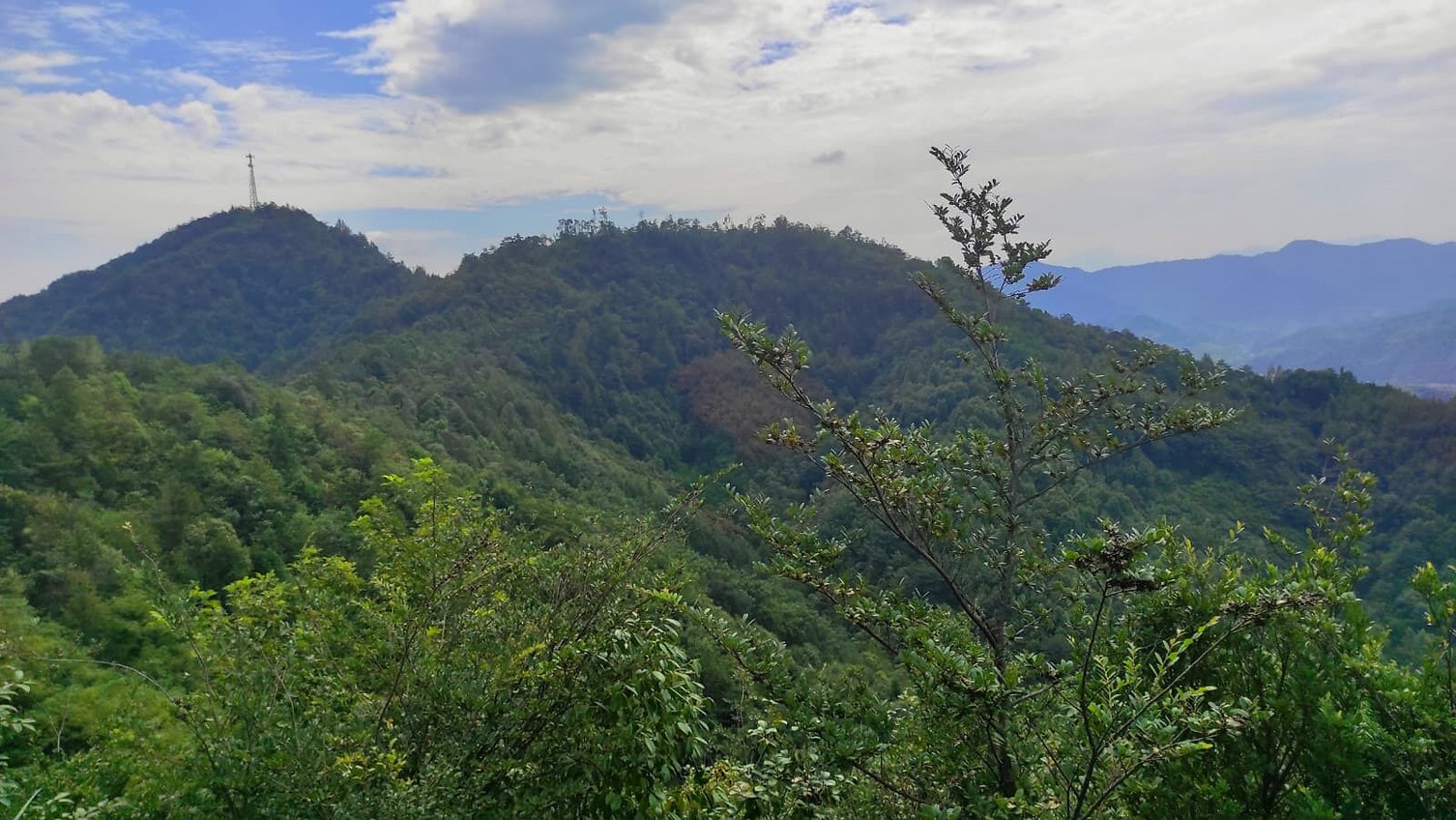
Until now, functional variation within a tree species – such as differences in leaf morphology or leaf nutrients – was often considered ‘phenotypic noise’, i.e. random variation without any major ecological significance. However, the study by Dr. Pablo Castro Sánchez-Bermejo of Prof. Dr. Sylvia Haider's research group proves that this is not necessarily the case: diversity within a tree species itself also contributes significantly to the functional diversity a forest. ‘Each tree seems to develop different strategies to minimise competition with its neighbours – even trees of the same species,’ explains ecologist Dr. Pablo Castro Sánchez-Bermejo. This leads to an astonishing functional diversity of strategies for the use of resources (i.e., nutrients, water and light) throughout the forest.
The research team examined over 4,500 leaves from 381 trees in China. Trees were growing in planted forest patches representing a gradient from monocultures to mixed forest stands with eight species, i.e. from species-poor to species-rich. They recorded various morphological and biochemical characteristics for each leaf in order to analyse how much these characteristics differ between individuals of the same species and how these differences contribute to functional diversity.
‘Our findings are of great importance for nature conservation. When tree species disappear from an ecosystem, it is not just one species that is lost, but a whole set of ecological strategies,’ explains Prof. Dr. Sylvia Haider.
As phenotypic diversity within species could be of great importance, protecting species alone may not be enough. ‘Future research should study how the diversity of form and function within species affects the way forests can respond flexibly to environmental changes and ensure their productivity’ argues Dr. Pablo Castro Sánchez-Bermejo.
The International Research Training Group TreeDì 林地 (‘Forest Land’), funded by the DFG and the University of Chinese Academy of Sciences, investigates how interactions between trees generate the effects of tree species diversity on key ecosystem functions. The interdisciplinary approach combines forestry science, plant ecology and soil research, among other fields, and is complemented by an intensive German-Chinese exchange programme.
Most of TreeDì studies use the BEF-China Platform (Biodiversity-Ecosystem Functioning China), currently the world's largest tree diversity experiment. While each project has specific questions, the individual sub-projects of the research training group complement each other in an interdisciplinary manner.
Researchers from Leuphana have been part of the international team of scientists conducting research on tree diversity in the world's largest biodiversity experiment for almost 20 years.