
Sustainability embraces the future
Celebration marking 15 years of the Faculty of Sustainability
2026-02-16 "Knowledge about sustainability must be expanded and also utilized." This is the message of the celebratory event marking 15 years of research and teaching developed at the Faculty of Sustainability at Leuphana University Lüneburg. The global political challenges that now confront the societal goal of a sustainable lifestyle are significant. Numerous experts and organizations at the symposium therefore supported the Lüneburg Appeal.
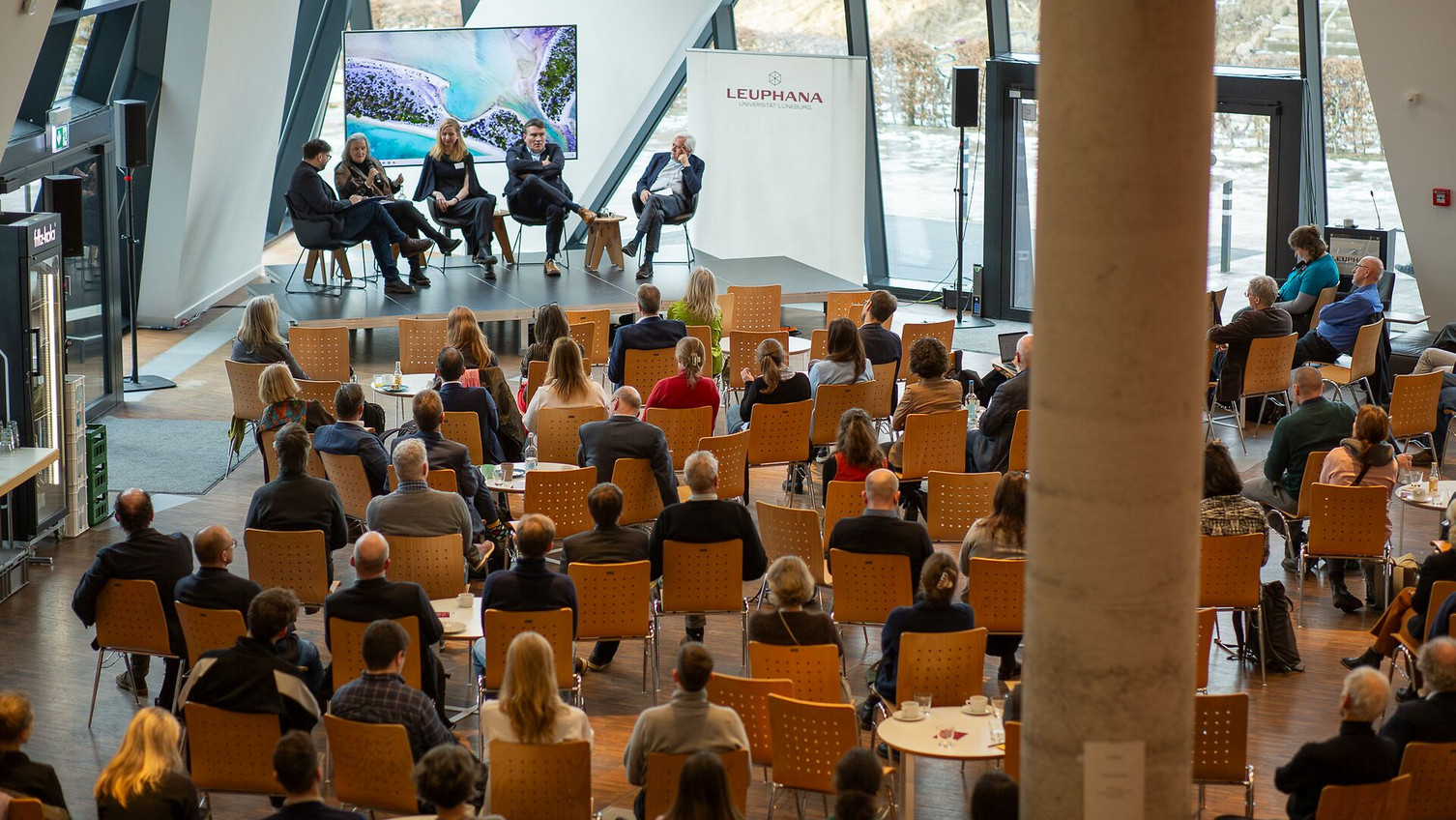
Successes must be acknowledged. But they also give cause for reflection. The Leuphana School of Sustainability has fulfilled both. It is at the forefront of its work. Looking from the present to the future, high-profile panel discussions, keynote speeches, and workshops at Leuphana University recently provided valuable insights. For Dr. Stefan Schaltegger, Professor of Sustainability Management at Leuphana, the results are clear: "It is the first faculty for sustainability in Europe and one of only a few in the world." He added: "Some have begun to emulate us here in Germany, and that's a good thing: It clearly demonstrates that we have become a leading institution."
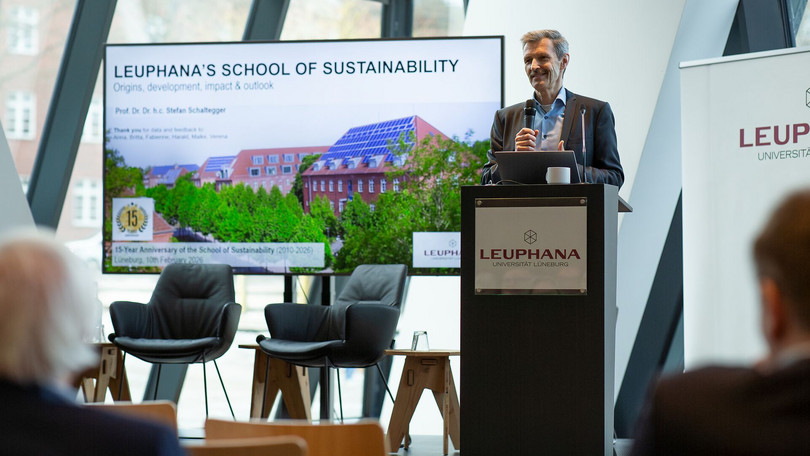
In February, the Professor of Sustainability Management led the approximately 150 guests through the faculty's past decade and a half in an engaging overview. The development is impressive: More than nine institutes with around 30 professorships have now been established. Nearly 200 employees are dedicated to sustainability every day. Schaltegger pointed to the milestones leading to success: "Every story has a prehistory." He explained that the starting point of today's School of Sustainability can be traced back to the development of the Environmental Sciences degree program in Lüneburg in 1997. According to Schaltegger, the fact that the current faculty has become a "core element of Leuphana's DNA" is evident not only in its outstanding research achievements, doctoral degree numbers, and successful degree programs, but also in its sustainable campus development.
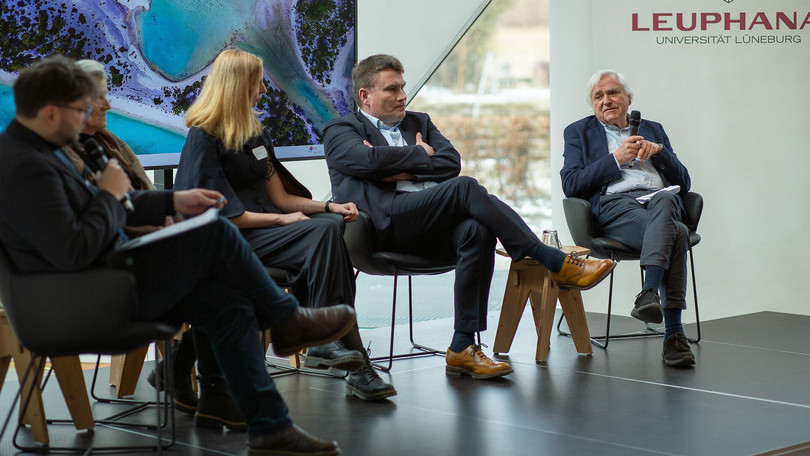
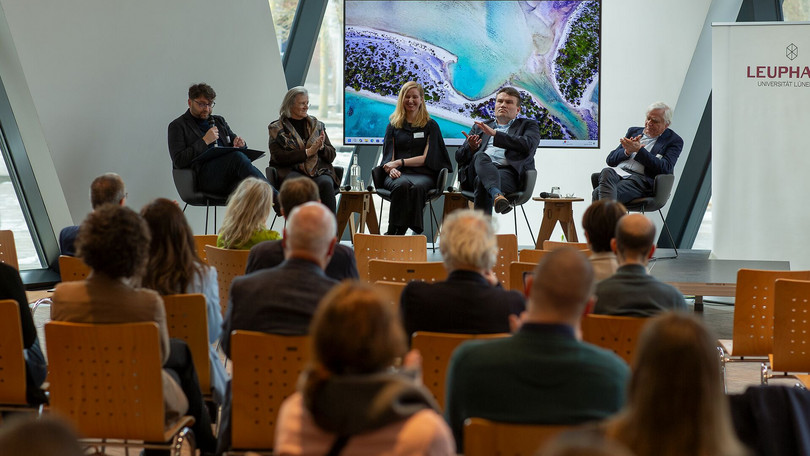
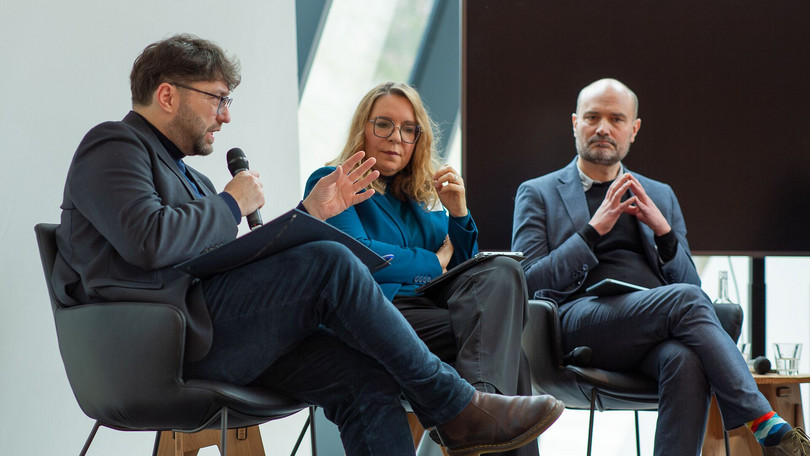
Photo caption below: Prof. Dr. Stefan Schaltegger (left), Sven Prien-Ribcke, Prof. Dr. Daniela Jacob, Prof. Dr. Maraja Riechers, Prof. Dr. Nils Ole-Oermann, Prof. Dr. Gerd Michelsen (center and right)
Persistence, skill, and perseverance are necessary.
A panel discussion addressed the topic of "Sustainability/Science: Yesterday – Today – Tomorrow." Moderated by Sven Prien-Ribcke, Professor Gerd Michelsen, one of the co-founders of the first environmental studies program and the faculty in Lüneburg, reminded the audience that resistance must always be overcome when it comes to sustainability. Then as now, perseverance, skill, and a long-term perspective are essential.
Climate researcher Professor Daniela Jacob from the Climate Service Center Germany agreed. Addressing her colleagues in the audience directly, she urged: "We can't just talk about climate change and say it will get three degrees warmer. This knowledge must be put to use, and for that, we as scientists must get out there, inspire our audience, and even deliberately challenge them so that it is put into practice."
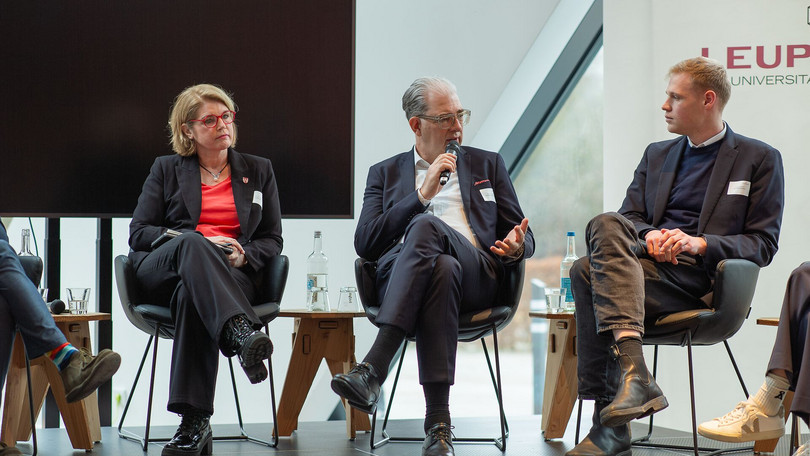
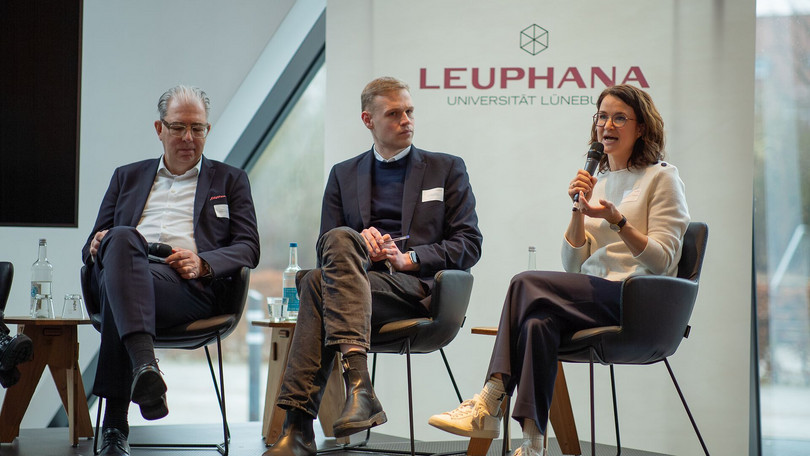
In the evening keynote address following a workshop on the future of sustainability science, Professor Anna-Katharina Hornidge, Director of the German Institute of Development and Sustainability, broadened the perspective. Her focus was on the challenges of global (dis)order and geopolitical tensions for sustainable development. It became clear how closely security policy is linked to sustainability issues. The symposium's closing panel discussion connected academic research with practical collaborations. The Mayor of Lüneburg, Claudia Kalisch, Chamber of Industry and Commerce President Andreas Kirschenmann, Member of Parliament Jakob Blankenburg, real-world laboratory researcher Prof. Dr. Daniel Lang, entrepreneur Dr. Anna-Katharina von Stauffenberg, and energy economist Prof. Claudia Kemfert highlighted the intersection of research, teaching, and societal practice. They outlined the opportunities and challenges of sustainable development for the city and region of Lüneburg.
Photo caption below: Sven Prien-Ribcke, Prof. Dr. Claudia Kemfert, Prof. Dr. Daniel Lang (left), Claudia Kalisch, Andreas Kirschenmann, Jakob Blankenburg (center), Andreas Kirschenmann, Jakob Blankenburg, Dr. Anna-Katharina von Stauffenberg (right)
Outlook: Open to new topics and approaches
Professor Harald Heinrichs, Dean of the School of Sustainability, concluded with a look to the future: “Despite the undeniable pressure on sustainability due to social and political changes, the symposium was characterized by confidence and a new sense of optimism. Crucial to this is that sustainability research and teaching continue to evolve and become even more open to new topics and approaches, such as security and geopolitics, right-wing populism and hostility towards science, authoritarian tendencies, artificial intelligence, resilience, and regenerative sustainability.”
Opinion on social media
Professor Claudia Kemfert, Professor of Energy Economics and Energy Policy at Leuphana University Lüneburg and affiliated with the German Institute for Economic Research (DIW), wrote on LinkedIn: “Sustainable transformation doesn't emerge in a space of consensus, but rather in the tension between climate policy necessity, economic rationality, and political feasibility.”
Professor Uwe Schneidewind, former Mayor of Wuppertal and President of the Wuppertal Institute for Climate, Environment and Energy, also praised the university on LinkedIn: “Leuphana University Lüneburg has become one of the most fascinating university transformation projects in Germany. It is now a 20-year success story. At the heart of the university's development is the first independent Faculty of Sustainability at a German university, launched in the winter semester of 2010/2011. I had the pleasure of serving on the appointment committee for the faculty's first endowed professorships.” And he goes on to say regarding the current challenges: "These are enormous in view of the social and political upheavals and the sometimes considerable backlash to the sustainability debate nationally and internationally."